Tribute to Rita Azevedo Gomes
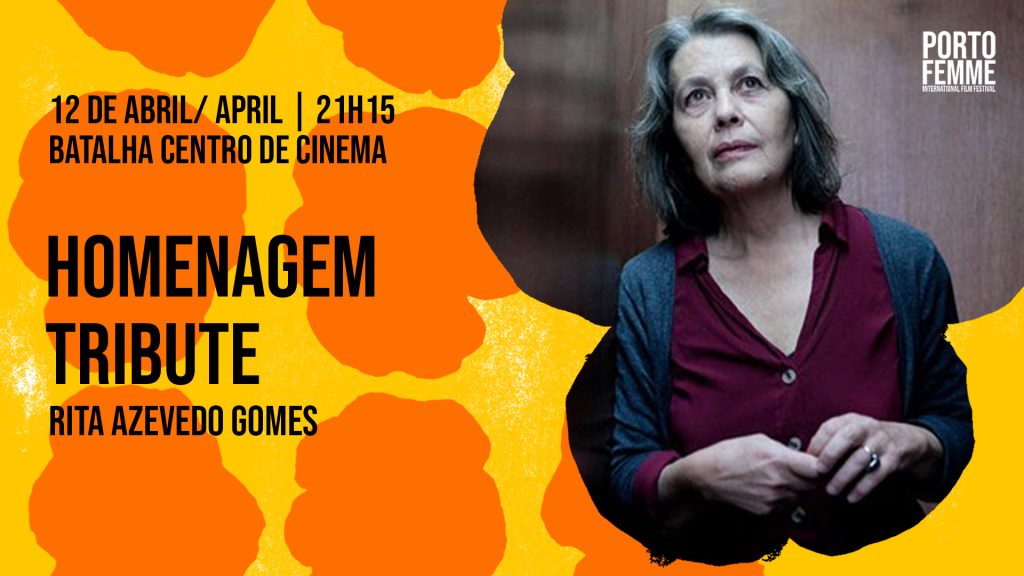
12th April | 21h15 | Batalha Centro de Cinema
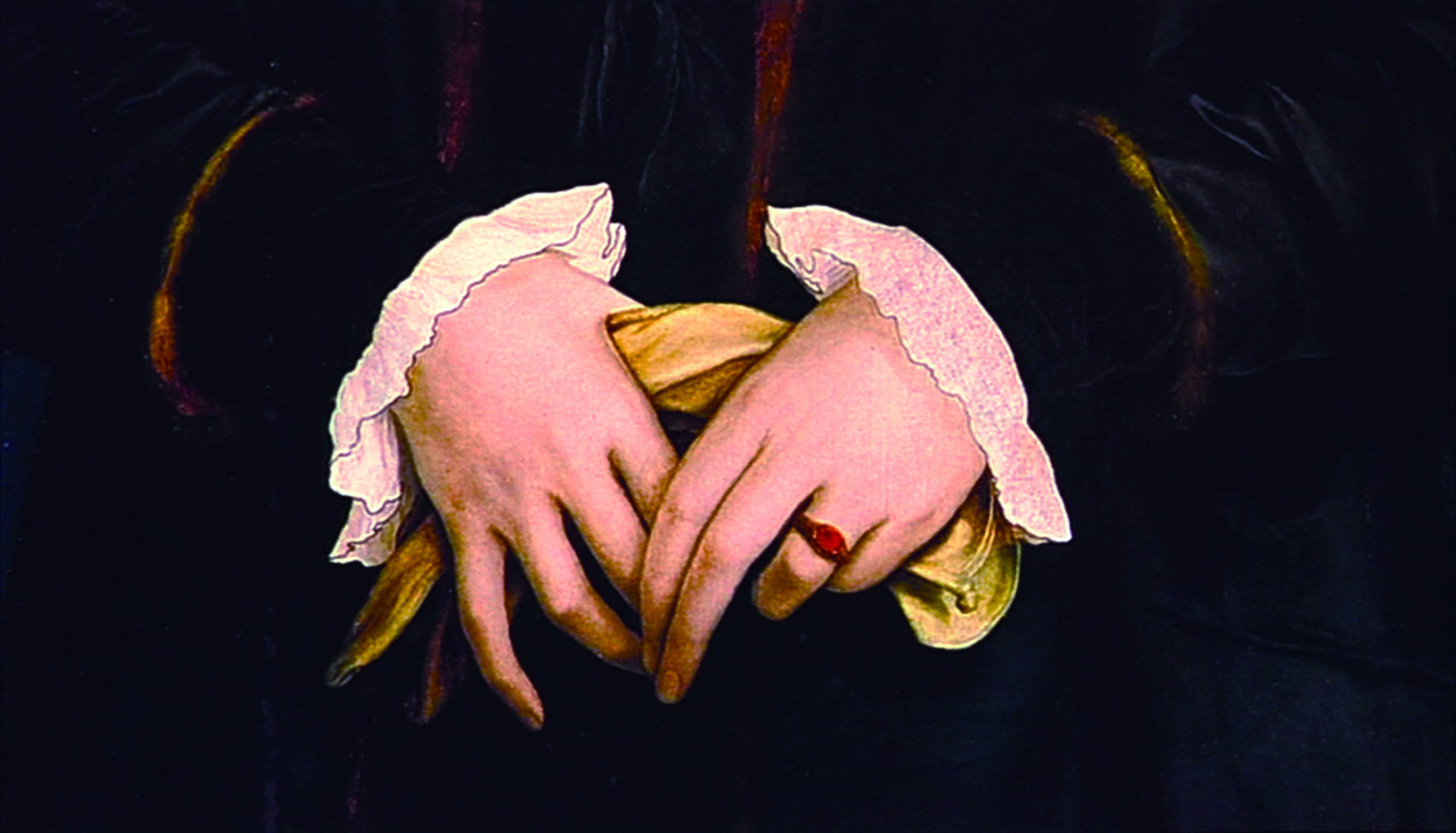
Screening of the film “Altar” (2003), followed by a conversation with director Rita Azevedo Gomes, moderated by Rita Benis
Continuing its annual tributes to Portuguese women filmmakers, as Porto Femme has accustomed us to, this year we highlight Rita Azevedo Gomes, recognizing her remarkable contribution to independent cinema and her unique approach to the seventh art. This tribute underscores her extensive career, marked by experimentation, aesthetic richness, and deep reflection on cinema as an artistic expression.
ALTAR
Portugal | 73’ | 2003
Director: Rita Azevedo Gomes
Producer: Rita Azevedo Gomes
Cast: René Gouzenne, Alice Lovelace, Thomas Toutain, Susana Moody
Synopsis:
René is an actor who has long withdrawn from the world following the death of his wife, Hélène. Proud in his isolation, he rarely sees anyone; however, he enjoys spending hours on the phone with friends. Haunted by ghosts from the distant past, the deep unrest of a first love remains as unfathomable as ever. Like the Hermann Hesse short story "Juin", which inspired the film, this is a story about the mysteries of memory and the power of its expression through the spoken word. The power of the word as a cinematic image.
TRIBUTE TO RITA AZEVEDO GOMES
I love beauty: the cinema according to Rita Azevedo Gomes
One never fully understands the origin of that first fascination that bind us to a particular cinema, but we don’t need much understanding in order to be struck by the “slow arrow of beauty” when we watch certain films. We recognize it in the blend of tightness and quickening of the heart that stirs us. We make a silent vow to return.
Since the mid-1970s, Rita Azevedo Gomes has explored a wide range of artistic fields , from cinema, to theater, opera and graphic arts. In cinema, she has collaborated with names such as Luís Noronha da Costa, Valeria Sarmiento, Manoel de Oliveira, João Bénard da Costa, Werner Schroeter and Pierre Léon, among others. More than three decades after her first film -— with around sixteen films directed in various formats, and with her works recognized at some of the most prestigious international festivals (Torino, Locarno, Berlinale, Mar del Plata, Indie Lisboa, Doc Lisboa, among others)-—, it remains a striking fact that Rita Azevedo Gomes' cinema continues to be scandalously crafted on the fringes of state funding, permanently challenged by the endless budgetary constraints inherent of self-production. Yet, refusing to yield, and moving forward with the help of friends and family, Rita Azevedo Gomes (miraculously, we would say) continues to film.
“I love beauty”, she says (on more than one occasion). All her films seem to confirm this principle. Film after film, her cinema, it's murmuring springs, speak to us of something that comes from afar, from the beginning of things: the convulsive wonder of beauty and of lovers. As Charles Péguy once wrote: “God is like a king who has abdicated into the hands of each of his subjects / Simply the supreme power.” A terrible Grace. It is this madness that Rita Azevedo Gomes’ films whisper to me. Her characters, through their abandonment to what provokes and stirs their feeling, are absorbed by what they feel: the terror of loving in a place as fragile as the world, the memory of the touch of a beloved hand, the lingering trace of an encounter, an illusion, a revenge. “Emotion is never false”, says Alberto (José Mário Branco) in O Som da Terra a Tremer (1990). We plunge into the images of these abandonments, their infinite ceremonies, guided by an essential fidelity to beauty —going through logics that are not made up of cause and effect, but rather of coincidences, affinities, visitations, chance. A book need only fall open to a fortuitous page for someone to find within it the very signs they seek.
.
This lesson is evident from her very first film, O Som da Terra a Tremer (1990), in which a book, with a bird on its cover, accompanies and connects various characters. Alberto (José Mário Branco) moves into a hotel room in order to finish a novel. As the writing progresses, fiction and reality overlap in an irreversible vertigo, to the point where Alberto himself becomes a character within his own literary universe. In Frágil como o Mundo (2001), two young lovers seem unable to find a place in this world for what they feel. Here, it’s the female character who drives the movement (it’s no Romeo and Juliet or Amor de Perdição).This guiding feminine force will echo through many of Rita Azevedo Gomes’ films. It is also a deliberate choice on the part of the director to craft her cinema in this way, allowing the two lovers to preserve a feeling that the fragile and implacable world has denied them. Their vows and promises, their words and feelings, remain with us forever. Just like the image of that dense wood in which they both take refuge. The ancients called silvae/silva (forest) to the “woody substance of language”, that is, the matter of the word. It is surrounded by this material that the characters in Rita Azevedo Gomes' films live.. The recurring verses, poems, dialogues, monologues spoken by the different characters, across different moments and films, evoke this pleasure: the essence of the word. That and the woods, forests, trails, branches and mosses; but also the birds, horses, wolves, water, and the mist, the veils of fog that open and close, accompanying the metamorphosis of light and words. Successive layers of things and time inhabiting one another . Memories that slip into the present, discreetly, delicately. As in Altar (2002), perhaps the most delicate and beautiful of her films. The memory of a gesture froma beloved woman is recounted by a man to a visitor, intertwining and merging with images, sounds, paintings, literature and musical pieces. Once again, the poetic words permeates everything, like a whisper. And everything resounds with echoes of that ancient devotion. This film is later followed by A Conquista de Faro (2005), her first collaboration with Agustina Bessa-Luís, who wrote the script. In this short film, we see a woman fall asleep and awaken within a staged performance, the scene setting of a story that will be told in a magnificent unique long take sequence. Once more, we return to the superimposition of spaces (palace/restaurant) and times. Rita Azevedo Gomes would film again three years later, A 15ª Pedra (2007). A documentary capturing a conversation between Manoel de Oliveira, the great master of Portuguese cinema, and the famous cinephile and director of the Cinemateca Portuguesa, João Bénard da Costa, who, not only would go on to appear in some of the director's films, but also would collaborate closely with her over more than thirty years, first at the Gulbenkian film department and later at the Cinemateca Portuguesa. The conversation flows between literature and cinema, the intersections of word and image, but also music, painting, theater, life. In a permanent exchange of references and provocations, a reflection of a mutual recognition, the long-standing acquaintance of the interviewees makes this film a unique testimony to cinema. Shortly after, she would film A Coleção Invisivel (2009), a short film based on a story by Stefan Zweig. In it, we follow the journey of a young antiques dealer into the heart of the country, as he attempts to acquire a rare collection of prints. Between the blindness of the collector (João Bénard da Costa) and the blindness of the modern world, we return to one of the touchstones of Azevedo Gomes' cinema: the constant effort to rescue from oblivion that which endures. A few years later, she would release the film that finally brought her wider international recognition: A Vingança de uma Mulher (2012), inspired by a short story by Barbey d'Aurevilly. With it, Rita Azevedo Gomes returns to her favorite characters, those who surrender themselves entirely to their feelings (in this case, a woman's obsession and sense of revenge). Another essencial aspect of this film is the transformation of the listener who hears this woman: “the film also explores how these words reverberate, affect and are inscribed in the lives of others”, as Adrian Martin and Cristina Álvarez López rightly pointed out. This is a recurring motif in many of her works. Nevertheless, It's important to remember that all this that reverberates (the essence of the word) only reaches us through the actors and the actresses, their bodies and voices, unfolding in their living flesh, at times utterly themselves, at times entirely their characters. Words are repeated and slip from mouth to mouth. Luís Miguel Cintra repeating the text in Correspondências (2016), the incessant metamorphosis of his voice, what it is capable of, is profoundly beautiful. Correspondências (2016) is a film that evokes the complicity and exchange of letters and poems between two of Portugal's greatest poets, Sophia de Mello Breyner and Jorge de Sena. Crossing oceans and dictatorships, we are engaged in the brilliance of this friendship and poetry. “Friendship is the only thing that the gods envy men”, as Agustina so aptly put it in her novel Fanny Owen, which was adapted for the screen by Manoel de Oliveira, in a film called Francisca (1981), which would be one of Rita Azevedo Gomes' first works (as costume designer/wardrobe designer). In 2018, Rita Azevedo Gomes returns to fiction with A Portuguesa. A text by Robert Musil “filtered” by the mastery of Agustina Bessa-Luís. According to Rita Azevedo Gomes, Agustina gave her seven or eight pages of dialogues (possibly among the last writings of the Amarante-born author). Lord von Ketten leaves for the war and is away for eleven long years. Meanwhile, his wife remains faithful and waits for him, not passively, but perhaps above all faithful to an idea of love that goes beyond the object of love itself. once again, Rita Azevedo Gomes offers us a film woven in multiple layers, each accumulating without disguise or resolution, much like the appearances of the extraordinary Ingrid Caven. It is a suspended time, where past and present intertwine, where evil and marvelous metamorphoses unfold witin the act of the performance itself, combine naturally with the more theatrical character of the film, creating pictures that resemble true illuminated manuscripts (the beautiful and exquisite photography by Acácio de Almeida, Rita Azevedo Gomex long-time accomplice in most of her' films). Once again, it is the delicacy, or the “sprezzatura” (as Cristina Campo would say), of the female protagonist that guides and shapes the film, triumphing over all swords. Jean-Louis Schefer, co-director alongside Rita Azevedo Gomes and Pierre Léon, of the mesmerizing Danses macabres, squelettes et autres fantasies (2019), would write that “cinema accelerates reality”, introducing ruptures, doubts - flashes of beauty that perhaps only the devotion of a few cinephiles and visionaries might be fortunate enough to capture. In the contemplative and playful drift of this film, the three of them rehearse a (serious) game made up of correspondences and rhymes between distant pasts and the present time. Finally, Rita Azevedo Gomes' latest film, Trio em Mi Bemol (2022)—inspired by a play by Éric Rohmer—is a sentimental comedy tracing the encounter of two former lovers. An encounter never truly concluded , never fully resumed. A man and a woman who still love each other and will continue to do so: returning to each other, listening to the music which, like them, keeps returning to themes, varying tones, without ever ending. The music, the architecture and the forest encloses them in an enigmatic play of echoes, creating a harmony that is pure pleasure. Where will Rita Azevedo Gomes next film take us? We will wait patiently for news of her next promenade with beauty.
Finally, it's important to keep showing Rita Azevedo Gomes’ films, making it visible. Many of her films remain difficult to access; a significant number of them isstill withheld from the public, waiting to be discover, despite all the awards and honors, all the international recognition received. This difficulty does not stem from a lack of interest—there are those who long to see her films—, but rather from an invisible but yet persistent barrier that to often rises between her films and its audience. A kind of market-driven resistence, an insistence on shaping cinema to its own image (in the image of commerce, of the mainstream). Rita Azevedo Gomes' films need to reach those who need them, they must be “passed along”, in the spirit of Serge Daney. They require places and opportunities for their surrender to beauty may reach those who have the eyes and the hearts attuned to seeing it. Part of this effort lies in helping future generations to develop a more critical gaze, one that is honest, attuned to the depth of the human experience. And this is precisely why the role of film retrospectives, tributes like the one we're doing here today, and film festivals, like Porto Femme, play an absolutely vital role. But then there is the other barrier I mentioned earlier. The responsibility for a film’s invisibility (or otherwise) should not rest solely on its intrinsic merit or on the so-called natural evolution of the market. We know how deceptive that notion can be. As long as there is a lack of greater equity in the cultural sector's decision-making positions, this cinema will continue to be marginalized, regardless of its merit. This, too, is something we must work to change. . My wish and hope is that we may all contribute to these precious and delicate films, so full of beauty and life, continue to be made and reach their viewers. For there are and will always be thosewho love and cherish what Rita Azevedo Gomes has chosen to love. It all comes back to that beautiful, enigmatic phrase bySophia de Mello Breyner, in Altar (2002): “Images so silent that, as I contemplate them, I feel I have closed my eyes”. A verse that lingers in the film, as though to remind us: don't forget to live, to love, to embrace beauty. Pherhaps that's what Rita's films seem to strive for: to tear, with infinite delicacy, through the great silence, to open our eyes once more. So that, touched by beauty, we may feel our heart beating, beating, without ever knowing how to explain why.

Rita Benis
Rita Benis has been working in cinema since 2002, writing scripts and directing. She has collaborated, among others, with Teresa Villaverde, Margarida Gil, Jorge Cramez, Pedro Figueiredo Neto, Inês Oliveira, António-Pedro Vasconcelos, António Cunha Telles, Vincent Gallo and Catherine Breillat. She has a master's degree in comparative literature and has taught Screenwriting, Literary Adaptation and History of Cinema. A researcher at FLUL, she has published books and chapters including “Exploring Film and Christianity” (Routledge 2024) and “Writing and Image” (Documenta 2020); or the chapter “Acts of Reading: The Demands on Screenplay Reading” (Palgrave 2023).

