| TALKS |
The space for conversations is mandatory in every edition of Porto Femme – International Film Festival. In 2026, the cycle proposes to reflect on the situation of women workers in cinema and audiovisual, the struggle for gender parity in the sector, the challenges faced by festivals dedicated to films made by women, as well as revisiting the legacy of the pioneers and discussing forms of women’s work that are often placed on the margins of society.
In this edition of Porto Femme, we offer you:
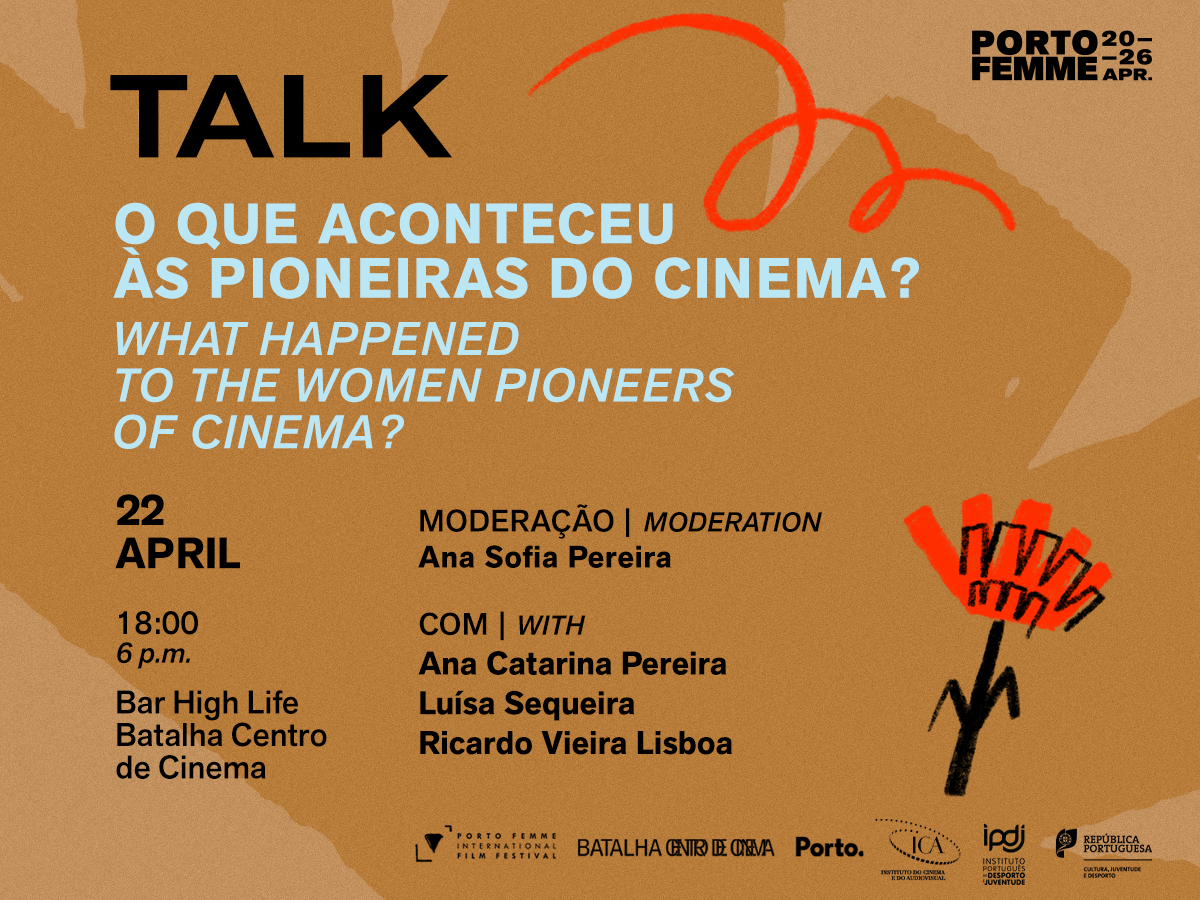
A conversation about the presence of women in the history of cinema, starting from their historical erasure and the invisibilities that continue to be repeated.
Between myths, fictions, and unrevealed truths, it is proposed to reflect on the importance of women’s archives and their fundamental role in the recovery, preservation, and reactivation of these histories.

In this conversation with different international festivals dedicated to films made by women, it is proposed to reflect on the current challenges of programming, circulation, and sustainability of these festivals, as well as on their role in creating networks, visibility, and new spaces for cinema made by women.
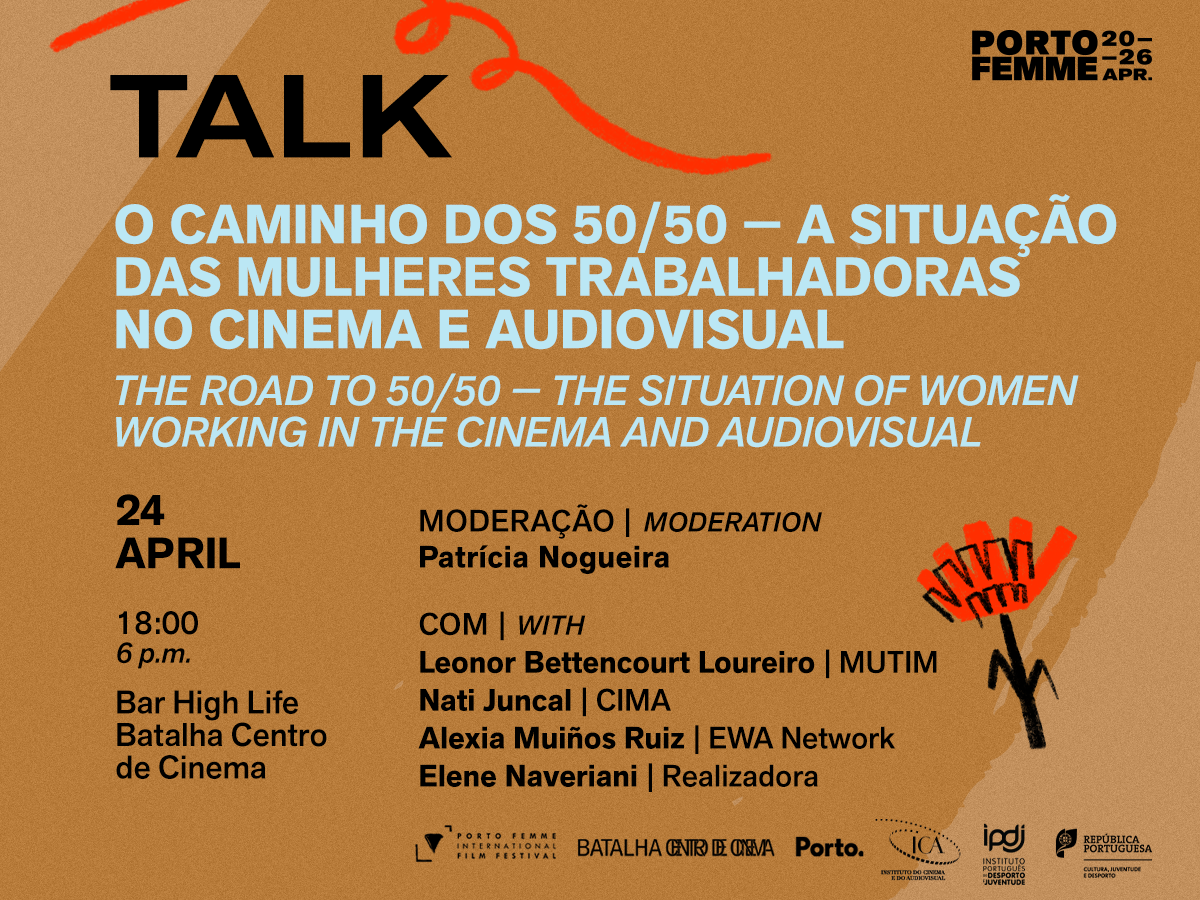
This conversation brings together people who work in the sector and European associations that operate in the promotion of gender equality in cinema and audiovisual.
“The Path to 50/50” proposes thinking about the trajectories, challenges, and strategies necessary to achieve greater equity in the sector. Drawing from different experiences, the session calls for the sharing of practices, obstacles, and possibilities for transformation.
An open space for dialogue about the present and the future of working conditions in cinema and audiovisual, bringing together people who make cinema and people involved in the sector.
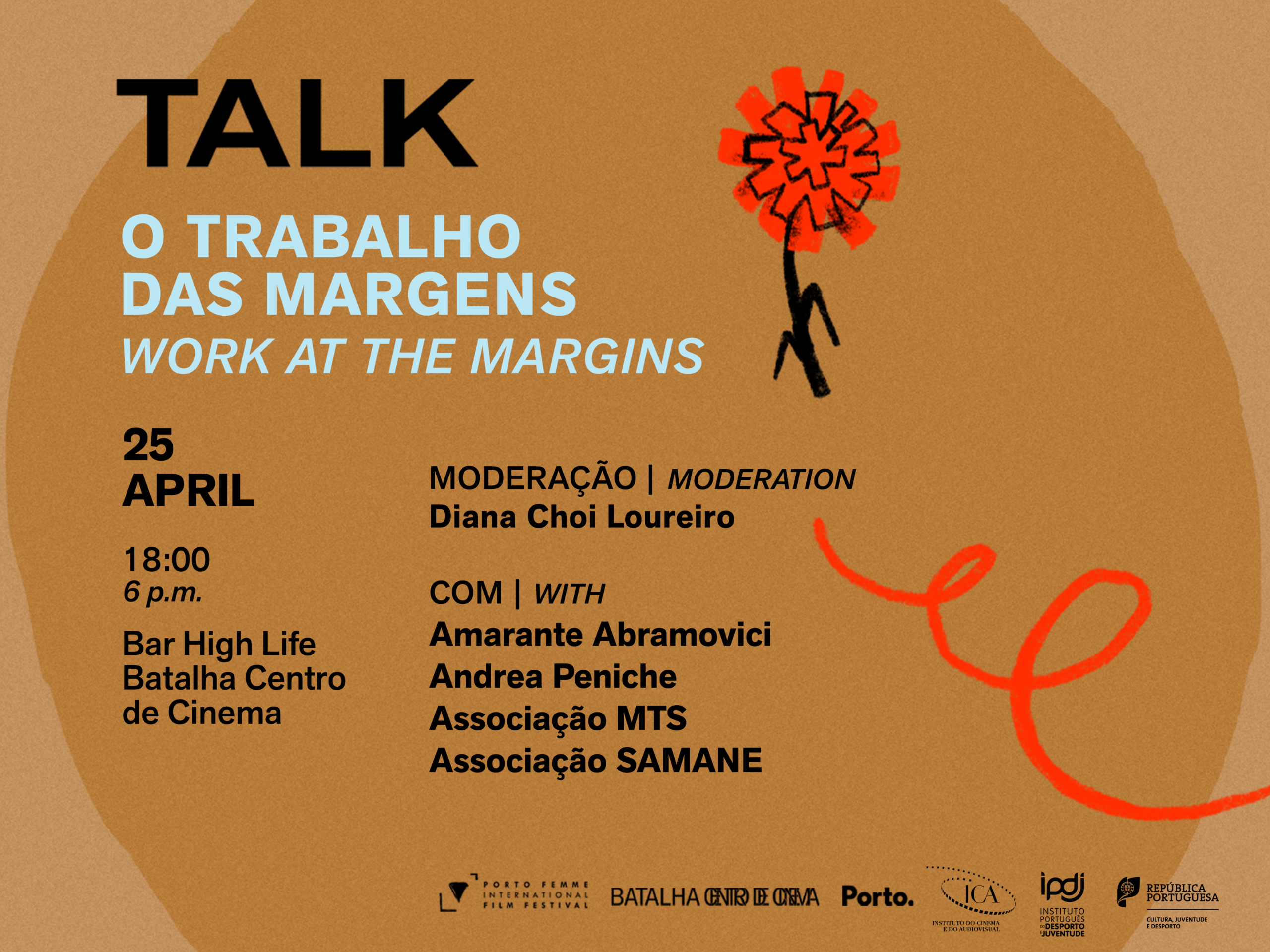
This conversation addresses forms of labour that are often invisibilized or marginalized, including sex work, reproductive labour, and other historically undervalued forms of labour, exploring their representations and social implications.
From different perspectives and experiences, the session proposes a reflection on the conditions under which these forms of labour are carried out, their social and political frameworks, and the forms of recognition and resistance that emerge from these contexts.
The encounter creates an open space for dialogue about the margins of labour, questioning hierarchies, visibilities, and the limits of what is recognised as labour.
!UPDATE!
This conversation remains on the 25th, at 6:00 PM, but now at MIRA | performing arts.

