 ANA CATARINA PEREIRA
Ana Catarina Pereira is a professor at the University of Beira Interior and has a PhD in Communication Sciences, in the field of Cinema and Multimedia, by the same university. She is the director of the Cultural Sciences degree and a representative of the Faculty of Arts and Letters at the UBI Equality Commission. Researcher at the LabCom.IFP center, she has a degree in Communication Sciences from Universidade Nova de Lisboa and a master’s degree in Human Rights from the University of Salamanca. She is the author of the books The Woman-Filmmaker: From art for art to an aesthetics of differentiation (2016) and the Study of Textile Worker Fabric of Cova da Beira (2007). She co-organized the works Mirrored films (2018) and UBICinema 2007/2017 (2017), with Luís Nogueira; Invisible Generation: The new Portuguese filmmakers (2013), with Tito Cardoso e Cunha; and Poetry Collection – Poets of Fundão, among others. She is the author of several scientific articles published in national and international journals. She has given several conferences, training courses, workshops and master classes in Brazil, Spain, England and Sweden, among other countries. She worked for several years as a journalist. She was the co-founder and director of the online magazine Magnetics Magazine and collaborated with the publications of the Notícias Sábado and the Notícias Magazine (Diário de Notícias), newspaper I, magazine Focus, among others. She is regularly invited to be jury at festivals or to curate exhibitions and film cycles. Being one of the founders of the International Conference of Cinema and Other Arts, held annually at the University of Beira Interior, she is also coordinator of the WG of Film Studies of SOPCOM. Her research interests include feminist studies, film studies, cultural studies, pedagogy in the arts, Portuguese cinema and other minority cinematographies. She manages the Universal Concrete website, with updated information about her work: https://www.universalconcreto.org/
 BASAK TEKIN
Basak Tekin was born in 1988 in Ankara. She is a sociologist graduated from Bahcesehir University, Istanbul. During her sociology studies, she was part of several fieldworks related to women and gender issues. After moving to Canada, she took the Certificate in Women’s Studies from Concordia University. She is currently working for the Flying Broom Foundation and is the international coordinator of Flying Broom International Women’s Film Festival. She will start her MA in Gender and Women’s studies next fall. She believes in solidarity, equality, wisdom of nature and freedom.
 BESTE YAMALIOĞLU
Having completed her BA and MA in Philosophy at Bogazici University, Beste YamalioĞlu completed a film certificate program during her undergraduate program. She works as the coordinator of Meetings on the Bridge and is the co-founder of Ehemm Production, currently working as producer and script advisor. She was selected for the 20th Sarajevo Talents Producers program and also MFI / Training for Script Editors. She is one of the trainers at Meetings on the Bridge Short Film Workshop. Recently, she produced a short film I, Loneliness Gadget A Hard Day at the Empire by Sezen Kayhan and I Am Not Talking About That by Ayris Alptekin. Currently, she is working on the feature length documentary project Women With Purple Violets by Sezen Kayhan.
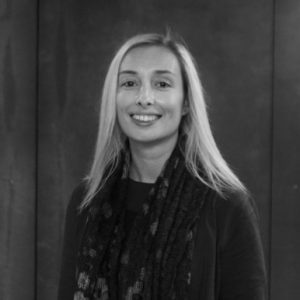 CARLA CERQUEIRA
With a PhD from the University of Minho in Communication Sciences, Carla Cerqueira specialized in Psychology of Communication, and currently a researcher at the Center for Communication and Society Studies at the University of Minho and assistant professor at the Lusófona University of Porto, Carla Cerqueira has been involved in projects and initiatives in the study areas of gender, diversity and media. Having supervised various theses and organized scientific events, and published articles in national and international books and magazines, she recently co-wrote De outro género: propostas para a promoção de um jornalismo mais inclusivo (2014) ( Another Gendre: proposals for the promotion of a more inclusive journalism), and co-edited Gender in Focus: (new) trends in media (2016) e Vozes Plurais: a comunicação das organizações da sociedade civil (Plural Voices: the communication of the civil society organizations). She has also published articles on photography and gender, and various feminist film analyses. She was the deputy coordinator of the Gender and Communication section of the European Communication Research and Education Association (ECREA). She currently includes the GAMAG Network – Global Alliance on Media and Gender, where she is part of the Research & Policy team. In addition, she participates in several scientific and non-governmental organizations in the fields of human rights, gender equality and feminisms, and she is moreover the president of Civitas Braga – Association for the Defense and Promotion of Human Rights. She is a member of the Council of Opinion of RTP (Radio and Television of Portugal), where she represents the NGOs of the Consultative Council of the CIG – Commission for Citizenship and Gender Equality.
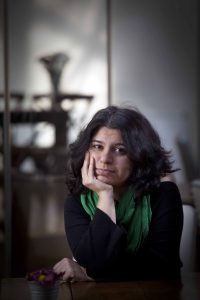 DENIZ ŞENGENÇ
Deniz Şengenç was born in 1984 in Turkey. She is a sociologist and documentary filmmaker graduated from Istanbul Bilgi University Sociology Department and studied Digital Editing at the New York Film Academy in NYC. For 10 years, she worked on several oral history projects as a researcher and on documentary projects as a cinematographer or editor. She has directed short and feature documentary films, as well as music videos and commercial videos for art projects. Şengenç is working on her new documentary film project. In addition to that, she is a currently the coordinator of the Flying Broom Foundation and the press officer of the Flying Broom International Women’s Film Festival. Her work focuses mainly on social issues including minorities, women and LGBTI+ rights, domestic violence and love, life and peace. She likes to tell stories and uses her camera for it.
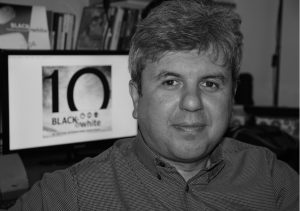 JAIME NEVES
Jaime Neves is a professor at the School of Arts of Universidade Católica Portuguesa where, since 2006, he teaches in the areas of Cinema and Audiovisual. Doctorate in Science and Technology of the Arts, he is an integrated researcher at the CITAR – Center for Research in Science and Technology of the Arts, where he focuses on themes related to cinema in general and the aesthetic variants of contemporary black and white cinema in particular. In 2004 he founded the Black & White – International Audiovisual Festival which, he directed, programmed and produced until 2016. He was the artistic director of Art & Tur – International Tourism Film Festival. An adept of cine clubs since adolescence, he has a professional past strongly connected to the radio (announcer and reporter) and to the theater (actor and director). He programs and directs Plan 9 – Cooperative of Production and Cultural Action, Crl, which he founded in 2019.
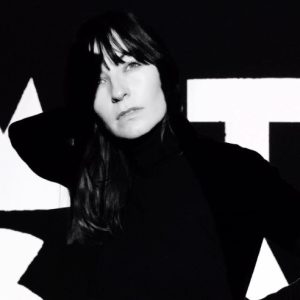 LUÍSA SEQUEIRA
Luísa Sequeira is a film curator and director, working with different technical platforms, such as video, film and photography, exploring the intersections of cinema and emerging media. She studied journalism, has a specialization in documentary making and is currently doing a PhD in Media Arts. She has worked for more than a decade at RTP, coordinating and presenting several projects. Among them was Fotograma, a weekly magazine dedicated to Portuguese speaking cinema. Since 2010, she has been the artistic director of the Shortcutz Porto – short film festival and the Super 9 Mobile Film Fest, the first Portuguese festival dedicated to films made with mobile phones. She recently premiered her first documentary feature “Who’s Barbara Virginia?”, which was screened at a number of film festivals, including the Rotterdam International Festival, Mostra de São Paulo, Doclisboa , and won the prize for best Portuguese documentary in the first edition of Porto Femme – International Film Festival. She produced and directed several short films, among them: Os Cravos e a Rocha, La Luna, Memória, substantivo feminino , My Choice. , winner of the International Television Festival of Rio de Janeiro. She made the documentary Women on the Stage for RTP, a documentary that portrays the preparation of the piece “The Oldest Profession” by Paula Voguel and staged by Fernanda Lapa. She co-directed with the artist Sama an experimental animation series of 13 episodes for the Brazil channel. She was recently selected for the film-making residency at the Meta Cultural Foundation in Romania. She has held several exhibitions, among them the most recent exhibitions in the gallery Adorna Corações (2018), Sputenik the window (2019) and gallery Nuno Centeno (2019). At the moment she is doing with the artist Sama the documentary Nada a Temer um filme sobre a actual situação política e social do Brasil and is producing with Luísa Marinho and Ana Luísa Amaral a documentary about The New Portuguese Letters.
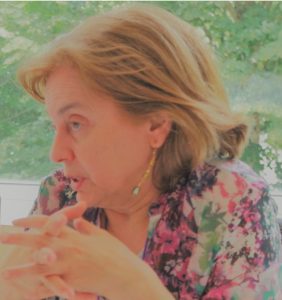 MARIA JOSÉ MAGALHÃES
Maria José Magalhães is an assistant professor at FPCEUP, CIEG and CIIE researcher, and doctorate in education sciences. She received the Carolina Michaelis de Vasconcelos Research Award for Women’s Studies (1990), and has several scientific publications (books and articles in national and international journals). The main areas of research focus on gender studies, feminism, social movements and gender violence (including femicide). She led the international project “Bystanders: developing bystanders responses to sexual harassment among young people” (prevention of sexual harassment – https://www.fpce.up.pt/love_fear_power/bystanders/bystanders.html). Main investigator of the CEINAV International Project (2013-2016), member of the COST Femicide Across Europe (2013-2017), and founder and scientific coordinator of the UMAR’s Observatory of Women Killed, OMA-UMAR (2004-2010). Currently, she coordinates the Project BO(U)NDS – Bonds and Limits: a longitudinal study on the prevention of gender violence in schools (financed by FCT). She has also been developing, along with other researchers, researches in the field of feminist criticism of art, including projects and published articles.
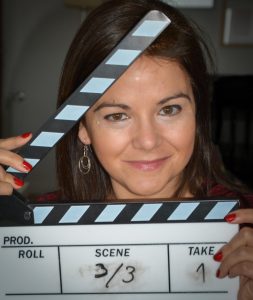 PATRÍCIA NOGUEIRA
Patrícia Nogueira (Porto, Portugal) directs and produces documentaries, and works regularly with other directors, both in fiction and documentary. In her documentary feature, 3 hours to love, she explores her theme of choice, addressing female emotions and sexuality. The film won the PrimeirOlhar award (Viana do Castelo, 2013) and was selected in several festivals, such as DocLisboa (2013), Cine Las Americas (Austin, 2014), FEST (Espinho, 2014) Berlin Feminist Film Week (2015) Filministes (Montreal, Canada) and Women’s Voices Now Film Festival (Los Angeles, 2017). She is a Professor at ESMAD – Escola Superior de Media Artes e Design (IPPorto), and at Instituto Universitário da Maia. She has a Master’s in Documentary Cinema from the Superior School of Music, Arts and Entertainment (IPPorto), and has received a PhD in Digital Media from the University of Porto, through the University of Texas International Program, Austin-Portugal. Her thesis, which she developed while a guest researcher at the National Film Board of Canada, focuses on the spectator of interactive documentaries. Her research interests are centred on contemporary documentary forms, especially on Digital Cinema, and on Feminist Film Studies. She is the vice-president of the European research group CCVA – Cinema and Contemporary Visual Arts, of NECS.
 PEDRO NEVES
Pedro Neves was born in Leiria in 1977. He studied in Porto, post graduated at Faculdade de Letras, Porto University, writing a dissertation for his Master’s degree on Documentary during the April’s Revolution in Portugal. He has been a documentary filmmaker since 2006. In 2008 he founded the production company Red Desert Films. His documentaries were presented in more than 40 festivals around the world, including CPH:DOX, Clermont-Ferrand, Guadalajara, Doclisboa, Porto Post Doc, Documenta Madrid, Curtas Vila do Conde, Curtas de São Paulo, Mecal, Extremadoc, Adana, L’Alternativa, Regard, Curtas Belo Horizonte, among others. His films have been exhibited in RTP, Canal Plus France and Afrique. His filmography includes films like “Gazing Out to Sea” (80 ‘, 2007), “En la Barberia” (6′ , 2007) , “The Forgotten” (63 ‘,2009), ”Disagreements” (49 ‘, 2010), “Cold Water” (14’, 2011), “The “Desert’s Fox” (85’, 2013) “Inn” (20’, 2014), “Beyond our Means” (43’, 2015), “Localism” (2015, 61’). In 2016 he directed “The Beach” (22’, 2016) and “Tarrafal” (91’ 2016)(CPH:DOX, Sevilla IFF, Porto Post Doc). In the same year, he produced “Home, El pays de la Ilusion”, de Josephine Landertinger, premiered in festival Internacional de Cartagena. In 2018 he produced “Bostofrio”, directed by Paulo Carneiro, premiered in Indie Lisboa, “Geni”, from Luís Vieira Campos (Porto Post Doc), to my parents., directed by Melanie Pereira (Doclisboa), and directed the short documentary “Shipwrecked” Náufragos, invited by Curtas Vila do Conde Festival, where it was World Premiere.
 RAQUEL FELGUEIRAS
Raquel Felgueiras is graduated in Fine Arts – Painting by the Fine Arts Faculty of the University of Porto. Post-graduated in Drawing by the Fine Arts Faculty of the University of Lisbon. In 2012, she completed her Masters in Animation at the University of the West of England, Bristol. As a result of her MA, she produced her first short animated film White, which was selected for several international animation film festivals and awarded with the “Young Portuguese Director” prize at CINANIMA 2012. Raquel has worked as an artist-researcher at the Faculty of Psychology and Education Sciences of the University of Porto, in the international project CEINAV-Cultural Encounters in Intervention Against Violence, and most recently in the project Bystanders – Developing Bystanders Responses to Sexual Harassment Among Young People. She has also been exhibiting her art work, which includes drawing and video, both in Portugal and in the UK.
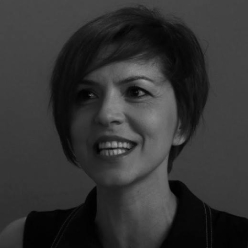 SÓNIA DE SÁ
Sónia de Sá is 39 years old and is originally from Barcelos, Portugal. She has a PhD in Communication Sciences and is a lecturer at the University of Beira Interior and the Polytechnic Institute of Guarda, lecturing in the Cinema, Communication Sciences and Cultural Sciences courses, she is an integrated researcher at the LabCom Research Unit. Her preferred areas of research are television and gender studies. She integrates several Erasmus+ projects on gender equality and work, and gender equality and volunteering. She is a member of the General Assembly of CooLabora – Cooperative of Social Intervention.

