 As in previous editions, Porto Femme honors women filmmakers who stand out, or stood, in the cinematographic panorama.
On this 4th edition we pay tribute to Margarida Gil, one of the most renowned Portuguese directors with the awarding of the Woman-filmmaker award.
In this session the public can watch the movie “Relação Fiel e Verdadeira” by Margarida Gil followed by a conversation with the director moderated by Ana Isabel Soares
Margarida Gil is an unavoidable name in the history of cinema in Portugal, especially after the 25th of April.
Born on July 7, 1950, Maria Margarida Gil Lopes was born in Covilhã, where she studied until moving to Lisbon, in 1968, to enter university. Despite her desire to follow Fine Arts, her taste for drawing and painting was old, it was in Germanic Philology that she graduated from the Faculty of Arts in the capital.
Life in Lisbon was not easy, having to keep several jobs to support herself, such as the Santa Casa da Misericórdia in Lisbon.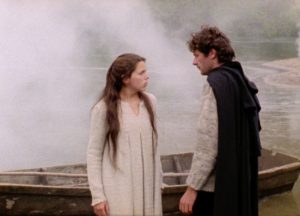
The proximity of Palácio da Foz allowed her to attend the Cinemateca, where she attended various sessions and met João César Monteiro, with whom she would marry and collaborate numerous times, including in the last work of his «Vai e Vem» (2003). João César Monteiro, in 1998, dedicated his film “As Bodas de Deus” to her.
In those early years, she met many people from the Portuguese cinema and cinematographic world, such as Jorge Silva Melo, Solveig Nordlung, Alberto Seixas Santos, Paulo Rocha or Fernando Lopes, among many others, and who she founded the Grupo Zero cooperative with.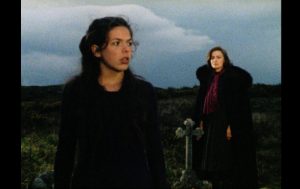
Her debut is with João César Monteiro, as assistant director in the film “Fragmentos de um Filme-Esmola-A Sagrada Família”, shot between 1972 and 1973 and signed by Maria Margarida Gil.
With the Carnation Revolution, in 1974, Margarida Gil was finishing her course and was unemployed. She got a job at the National Broadcaster (now Antena 1), doing a radio show and contributing to the news.
The following year, she returns to be not only assistant director for João César Monteiro, in “Que farei eu com esta Espada?”, but also actress in it.
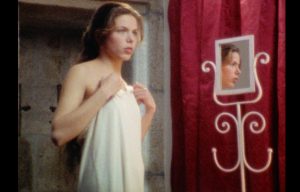 It was in 1975 that she joined RTP-Radio Televisão Portuguesa, first as a collaborator, then as a director, a connection that lasted for several decades. In those early days, on the public station, she made several documentaries of a militant nature, typical of that time, dealing with the production of texts, from voice over to editing. «Clínica Comunal Popular da Cova da Piedade», «Para Todo o Serviço» or «Arca de Noé» were notable during that time.
In 1980, she became the official director of RTP, after taking a production/direction course. As a director, she signed several programs with various personalities, such as João Bernard da Costa, Inês de Medeiros, Mário Viegas, Marco Paulo, Júlio Isidro or Herman José. 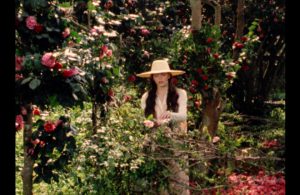
Already married to João César Monteiro, Margarida Gil returned to work with the filmmaker as an assistant director and actress in several cinematographic works. In 1986, they founded the production company Monteiro & Gil, which would produce Margarida Gil’s debut film in 1987, «Relação Fiel e Verdadeira», her first fiction feature, an adaptation made by the director and Luiza Neto Jorge from the 17th century autobiographical work «Relação
Fiel e Verdadeira que Dá dos Sucessos da sua Vida a Criatura Mais
Ingrata ao Criador», by Antónia Margarida Castelo Branco.
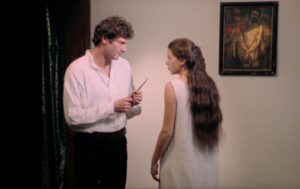 This first work, in which she was also part of the cast, was presented at the Venice Film Festival, in 1987, and only in June 1989 it premiered in Lisbon.
In 1992, she directed her second feature film for cinema, «Rosa Negra», which never made it to commercial cinemas. On the other hand, she made several video documentaries, with emphasis on “Maria”, made for the Fifth Women’s Conference, which took place in Beijing, but especially for “As Es Escolhas”, about the life and work of the painter Graça Morais.
The year of 1998 marks her return to the screens with «The Guardian Angel», being “Mar” her most recent feature film, from 2019.
In between, she directed the short film «Don’t Cut Me the Hair My Father Combed» (2004), «Adriana» (2005), «Perdidamente» (2009), «Passion» (2011), «O fantasmo do Novais» (2012) and the short film «A Esquina do Tempo» (2012).
Meanwhile, she left RTP and devoted herself to teaching and research at the Faculty of Social and Human Sciences at Universidade Nova de Lisboa.
At the same time, Margarida Gil has dedicated her time to her former passion for drawing and painting.
Margarida Gil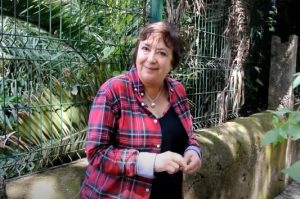
by Ana Isabel Soares
In October 2018, Mariana Liz and Hilary Owen reached out to me and challenged me to write a chapter about Margarida Gil, for the book they were preparing, about Portuguese filmmakers for an international publication. My knowledge of this director’s work, at the time, was very small. One of the reasons why I didn’t know Margarida Gil’s work well (I would have seen two, maybe three of her films), I realized, was because of what I called in the essay I wrote “a measure of invisibility”: it was difficult to locate and watch her movies. At the time, four were available on the market, either on DVD or on streaming platforms. On DVD, there was the 2007 documentary about Carlos de Oliveira (Sobre o Lado Esquerdo); the series of programs in which Bénard da Costa presented eight films, No Meu Cinema; some programs on the RTP platform, who produced them; Luz Incerta, on a video-on-demand platform. It was to try and see the many other films that were occluded to me and other viewers that one day I called Margarida and moved from Faro to Lisbon. It was her great generosity that allowed me to have access to her almost complete work. At the time, I believe that the production of Mar was finished, which I only saw after writing the article.
This was the immediate reason to get to know and study Margarida Gil’s films: and what an opportunity! At the same time that I realized the longevity, complexity and richness of her work, I was more surprised and indignant by the near silence around her – about her work and about the woman. It cost me (it costs me) to convince myself that it was precisely her condition as a woman that confined her to a place of concealment in Portuguese film studies. But the evidence was increasingly obvious. Alongside this absence, I can imagine others and, as a result of these, relevant portions of the history of cinema and television in Portugal are still to be discovered. 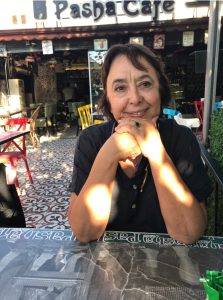
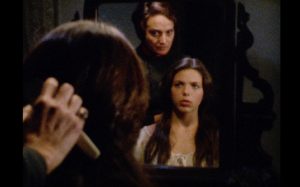 Among the many aspects of Margarida Gil’s films, two seem to me the best qualities in any artist’s work: a vein of humor that presupposes a deep self-knowledge and, simultaneously, a benevolent look at the world – and love, which, echoing this benevolence, also results from a social concern that structures Margarida Gil’s aesthetic and ethical position. The denunciation of social problems such as those that tormented (and, to a certain extent, still do) women during the time of the dictatorship and in the transition to democracy; any kind of violence; the Timorese cause, symbol of the oppression of human beings by human beings, which continues to worry her and which can be seen in the balance between denunciation and laughter in her most recent film.
I would like to think that Margarida Gil’s sensibility comes not only from her experience in the world of cinema and television but also, and perhaps initially, in her passionate contact with the literary field that awakens Margarida Gil’s gaze to a narrative way in particular, of proximity and distance, awareness of the means of expression and the potential of forms (color, music, the work of actors to build characters) – her ability to tell stories.
For all these reasons, it is so important to show the work of Margarida Gil, to encourage the analysis of her films, to activate the criticism that keeps them alive.
For them, for her, but above all for us.
Ph.D. in Theory of literature from the faculty of letters in Lisbon (2003), where, in 2009, completed a postdoctoral investigation about Portuguese cinema and poetry. She has been teaching since 1955 at Algarve University as an assistant professor

