Margarida Cordeiro
for Ilda Teresa de Castro
Learning for those who want to Love
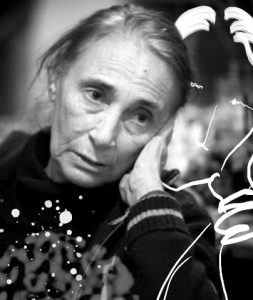
I met Margarida Cordeiro at the time she was preparing the film Rosa de Areia, the third and last one she co-directed with António Reis, of whom I was a student at the Escola Superior de Teatro e Cinema since 1986. I watched the shooting of some scenes in the National Museum of Natural History and the Botanical Garden, Lisbon. Back then, there were few women directors, in Europe, in the world and in Portugal. Seeing a woman directing and guiding a predominantly male team was something very rare that caught the attention, stayed in the memory and raised questions and comments, not forgotten. A few years later, we found ourselves in the vicinity of Príncipe Real, in conversations and urban walks punctuated by her travels between Lisbon and Cacilhas, where she had a painting studio. I remember that she offered me an ointment that still exhales a strong smell of melon when I open the lid of the small bottle. In 1998, when I programmed the Portuguese Film Day, part of the 6th Trencianske Teplice-Trencín Art Film Festival, in Slovakia, we left for that small thermal town, from where Margarida returned to Portugal earlier to participate in the first referendum for the legalization of abortion. Shortly after, Margarida headed to the northeast of Trás-os-Montes, where I visited her in 2000 for the collection and compilation of the oral record Portuguese Filmmakers 1874-1956, talks with…[1] There, I had the privilege of walking with her through places, climbing rocks to scrutinize the northeastern landscape or contemplating the green banks of the Alto Douro. Margarida collected dogs abandoned or mistreated by local populations – a wretched scourge that reproduces like the metastases of a carcinoma, all over the country – and took care of them with attention and affection, dedicating a good part of her daily time to them. We haven’t seen each other since, but her work has remained present in my life, which has gradually derived more and more to Nature and human/more than human inter-relationships, in a common convergence of affections for the living and the non-living.
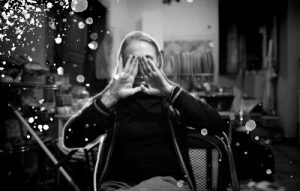
There is an idea of hers that has accompanied me in my artistic-scientific ecocritical research, which says the following: “For us, in film, Nature works as an exterior house. There is a house, with its spaces and its sounds, but the outside sounds give us the idea of a house that is closed in on itself and open on Nature, on the outside it is also a house, it is also inhabited”[2], affirming this contamination of scales, beings and constituent domains of the universe in which the human subject is inscribed.
Their films, immersed in the natural between-worlds, rehearse a dialectic between microcosms and macrocosms, between the sky, the earth and its movements and mysteries. The other species and inorganic materials are presented in the greatness of the universe, worthy of respect alongside the human. The trees, the stones, the paths, the elements, are characters like the human ones. The mysteries of life and the mysteries of nature merge into one another, for which there are sometimes no words.
In these works there is a concern for the irreversible loss of cultural, human and more than human values.
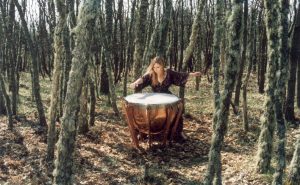
They draw particular mnemonic distinctions and recreate epistemologies and primordial gestures in fading away. They are inspired by ancient echoes transmitted in traditions, legends and symbologies, and in the relationships of individuation that the subject found and developed in stages of proximity and interaction with morphologies more and more distant for most of us.
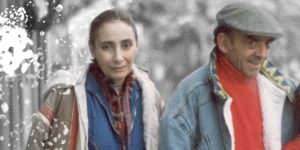
Anchorages of ancient wisdom founded in successive schools that have transmitted it to one another, and in the authenticity of signs at risk of extinction – irremediably dragging along with them the profound truths that they contain, as well as their history and memory – point to the danger of erosion of this knowledge, and to the impoverishment that this loss means for all humanity. This is how they warn that we are not safeguarding essential ancestral knowledge, a reflection that could not be more topical in these anthropocene and dromological times in which we live.
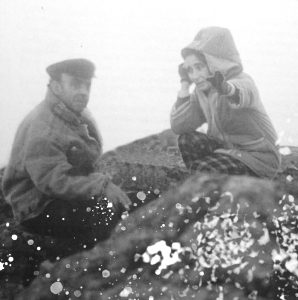
The model – which has so many configurations – androcentric, speciesist, anthropocentric, homogenizing and massifying, consumerist and alienating, which characterizes capitalist, hyper-industrialized and hyper-technological “developed” societies; this model, it said, could not be more antagonistic to the legacy of Margarida Cordeiro’s work. Listening to these films and following the lines (in)between the formal diegetics that shape them, is an apprenticeship, for whoever wants to love them.

[1]The second book of a trilogy dedicated to Portuguese Cinema: Portuguese Filmmakers 1874-1956 [conversations with Noémia Delgado, Teresa Olga, Margarida Cordeiro, Monique Rutler, Paola Porru, Solveig Nordlund, Renée Gagnon, Manuela Serra, Margarida Gil, Rosa Coutinho Cabral, Cristina Hauser, Rita Azevedo Gomes], Lisbon City Hall – Culture, Lisbon, 2001. The first is also part of it, Curtas Metragens Portuguesas [talks with Edgar Pêra, Fátima Ribeiro, Ivo M. Ferreira, Jeanne Waltz, João Pedro Rodrigues, José Gouveia, Júlio Alves, Pedro Caldas, Rita Nunes, Ruy Otero, Sandro Aguilar, Wilson Siqueira], Lisbon City Hall – Culture, Lisbon, 1999; and the third, Portuguese Animation [talks with Mário Neves, Servais Tiago, Artur Correia, Ricardo Neto, António Gaio, Hernâni Barbosa, Vasco Granja, Abi Feijó, Regina Pessoa, Paulo Cambraia, Mário Jorge, António Costa Valente, Nuno Amorim, Humberto Santana, José Miguel Ribeiro, Zepe], Lisbon City Hall – Culture, Lisbon, 2004.

[2] In interview by Pedro Borges, JL, 14 May 1985.

