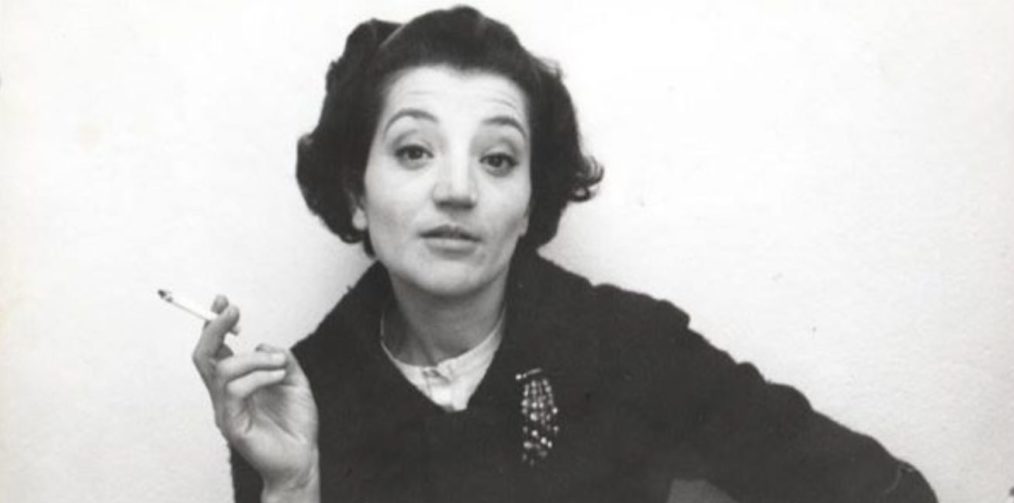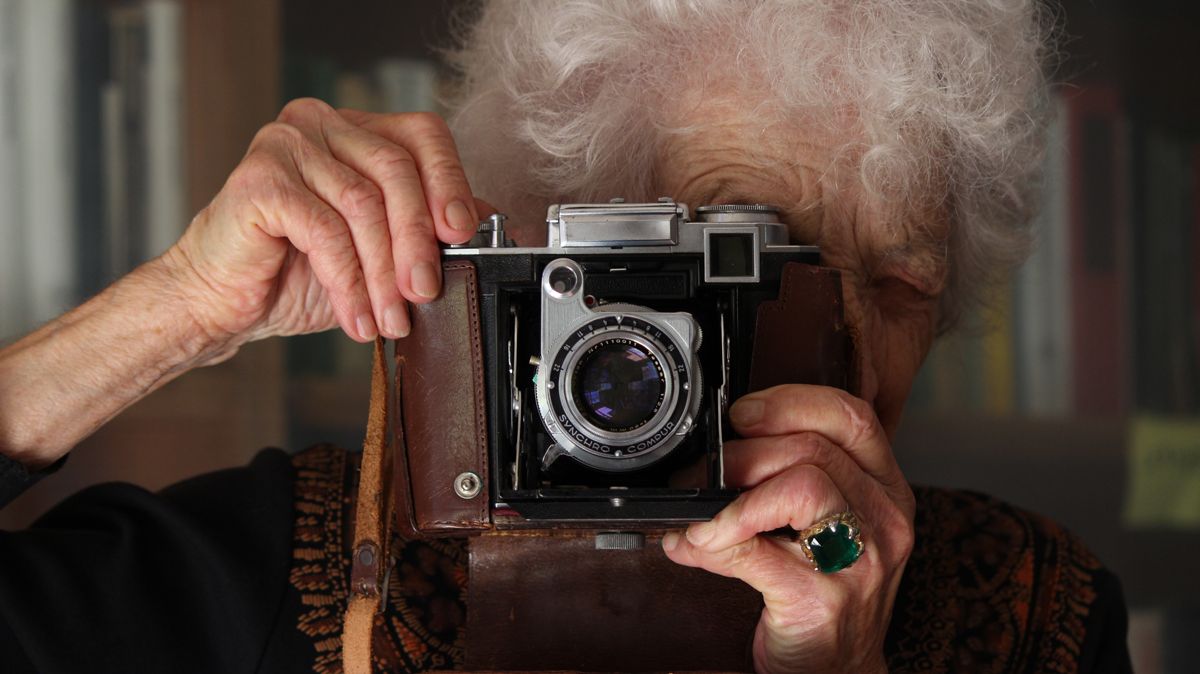
Thinking of cinema as a tool of resistance is what Cecilia Mangini has done over seven decades, in her countless documentaries on urgent topics, such as peripheral and marginalized communities, immigration, the roots of fascism or social injustice.
The condition of women is present in several works of the Italian filmmaker.
The historical context that she lived over 94 years, marked by the great conflicts and crises of the 20th century in Europe, is observable in her work, whose vision is committed and very intimate with the individual and society.
The first woman to film a documentary in post-war Italy, Cecilia Mangini, who left us at the beginning of this year, has always been a filmmaker committed to the most disadvantaged and the most marginalized and subordinated sections of society.
Porto Femme, in its 4th edition, pays tribute to Cecilia Mangini, a woman who dedicated her life to cinema and social issues who left us last January, at the age of 94. Born in 1927, she was an anarchist, which ended up being reflected in her work, first in photography and then in film. A name among the greatest documentary filmmakers in Italy, Cecilia Mangini was the first Italian woman to make documentaries in the post-War period, work she defined as “libertarian”. She made her film debut with a short documentary, in which she had the collaboration of Pier Paolo Pasolini in the text by Ignoti alla Cittá (1958).
In this 4th edition, Porto Femme will exhibit the follow movies:
- Stendalì (suonano ancora), 1960
- La briglia sul collo, 1974
- Maria e i giorni, 1959, 11 min
Stendalì (suonano ancora), 1960
A funeral lamentation is sung by women in a dialect so old that it came from the ancient Greeks who once colonized that part of southern Italy.
La briglia sul collo, 1974
We enter the universe of Fabio Spada, a child from the Roman suburb of San Basilio: Fabio has been defined by the school as a misfit. His father, his mother, the director and the psychologist of the public school of the "borgata romana" (and even himself) tell us about him.
Maria e i giorni, 1959, 11 min
A portrait of the elderly Maria di Capriati, the woman who christened Cecilia Mangini as a baby, and whom MANGINI considered a godmother figure. It takes an ethnographic approach to show the memories, mysteries, and ancient rituals which give animation to the life of a woman who struggles to let them go with the past.