As in previous editions, Porto Femme honors women filmmakers who stand out, or stood, in the cinematographic panorama.
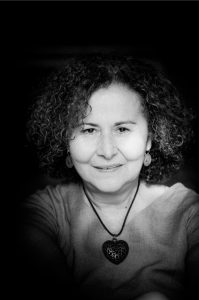
On this 4th edition we pay homage to Cucha Carvalheiro, one of the most renowned Portuguese actresses, as a result of her performances in theatre, cinema and television and her extended activity in teaching, dubbing and writing.
In this ceremony we will celebrate Cucha Carvalheiro’s career and present the Woman-filmmaker award.
Olinda Maria Carvalheiro da Fonseca e Costa, Cucha Carvalheiro for the world, is one of the most renowned Portuguese actresses, the result of her performances in theatre, cinema and television, extending her activity to teaching, dubbing and writing.
Born on October 21, 1948, in Lisbon, after completing her degree in Philosophy at the Faculty of Arts of the University of Lisbon, Cucha Carvalheiro began her professional career in teaching, where she spent seven years.
However, the appeal for the art of representation, after the years at university in which she was always participating in university theater, spoke louder and, in 1979, she embraced a career as a professional actress at Teatro do Mundo, where she was a student of Manuela de Freitas and Jean-Pierre Tailhade.
When embarking on acting, Cucha Carvalheiro gave space to an old desire, writing school books and children’s work, having also worked as a screenwriter, in addition to teaching acting at the Escola Superior de Teatro e Cinema.
Six years after becoming a professional actress, she received her first awards: Nova Gente Trophy (Revelation 1985), Sete de Ouro (Revelation 1985) and the Women Magazine Award (1985).
She played countless roles, in a variety of styles, including drama authors such as Brian Friel, Nicholas Wright, Chekov or Tennessee Williams, farce such as Gil Vicente, Jean Genet or Richard Dérmacy, but also comedy such as Alan Ayckburn, Edward de Filippo, Niel Simon or Feydeau, and of tragedy such as Euripides, Kleist or Sophocles.
On stage, she was directed by great directors, including Jorge Listopad, Rogério de Carvalho, João Mota, Mário Viegas, Fernanda Lapa, Ricardo Marquez and Michel Mathieu, among many others.
It was through the hand of João César Monteiro that she made her film debut in 1982, in «Silvestre». Since then, she has worked with renowned directors such as José Fonseca e Costa, in “Balada da Praia dos Cães”, “Os Cornos de Cronos”, “Cinco Dias, Cinco Noites”, “O Fascínio”, Jorge Paixão da Costa, in «Adeus Princesa», Fernando Silva, in «Carga Infernal», Margarida Gil, in «O Anjo da Guarda» and emerging filmmakers, such as Rita Palma, in the short film “A Cozinheira que engoliu um alfinete”, Rita Nunes, in «Contas do Morto», or Tiago Matos, in «O Meu Sósia e Eu».
Her most recent film work was “Bem Bom”, by Patrícia Sequeira, premiered in 2020, a film about the Portuguese musical girl band phenomenon Doce, for which she is a co-writer.
With Fernanda Lapa, she founded, in 1995, the Escola de Mulheres – Oficina de Teatro, and, two years later, she incorporates the cast of «Portas Comunicantes», at Comuna, and, in 2011, «Casamento em Jogo», at Trindade Theater.
Her journey on stage was consecrated in 2004, when she received the Golden Globe for Best Theater Actress, for her performance in “A Cabra”, by Edward Albee, at Teatro da Comuna.
But her career in theater is not limited to acting, having, for example, staged, in 2006, “Hotel dos Dois Mundos”, by Eric-Emmanuel Schmitt, in the Sala Estúdio, of the Teatro Nacional D. Maria II.
Between 2009 and 2013, Cucha Carvalheiro directed Teatro da Trindade, where she presented plays such as the opera buffa «Quixote», by António José da Silva, staged by João Brites, «Máquina de Somar», staged by Fernanda Lapa, «Não se Ganha, Não se Paga”, by Dario Fo, directed by Maria Emília Correia, “O Libertino”, by Éric-Emmanuel Schmitt, directed by José Fonseca e Costa, “Vale”, by Madalena Victorino and the theater adaptation from Lídia Jorge’s novel “O Dia dos Prodígios”, but also classics such as “Vânia”, by TcheKov, “Othello”, by Shakespeare, “Do Alto da Ponte”, by Arthur Miller, “Casamento em Jogo” by Edward Albee, or “Happy Days and What?” by Samuel Beckett.
An area where Cucha Carvalheiro has also stood out is in the dubbing of the most varied characters from children’s films, having, among others, given voice to the Witch, in «Snow White and the Seven Dwarfs», Queen of Hearts, in «Alice in Wonderland”, and Flora, in “Sleeping Beauty”.
The actress has also been part of the cast of several soap operas and television series, such as “A Paz dos Anjos” (1994), “A Mulher do Senhor Ministro” (1997), “Ballet-Rose” (1998), «Os Lobos» (1998-1999), «Olhos de Água» (2001), «Super Pai» (2002), «Baía das Mulheres» (2004-2005), «Flor do Mar» (2008-2009), « Depois do Adeus” (2013), “O Beijo do Escorpião” (2014) and “A Única Mulher” (2015), among many other works for the small screen.
 CUCHA CARVALHEIRO: MULHER, VOZ E PALAVRA
CUCHA CARVALHEIRO: WOMAN, VOICE AND WORDS!
She loves words because words have History!
She will be immortal in Theater because, as long as there is voice and memory, it will be for life!
She loves Theater because it is Time, it is the Present and it is the immediate emotion of those on the other side watching!
She would like to do more cinema, as Portuguese filmmakers would also like to do… much more often!
Everything would be much better if only good texts were represented! Playwrights? Screenwriters? She only likes the Big Ones!
The awareness of the dimension of injustice found her, during childhood in Benguela, through racism and relativism that words also contain.
She feels like a fish in the water when she makes high comedy, when texts allow her to create a game between laughing and crying.
She is the actress of presence, from “being there every day” to “hearing” the other as if it was the first time.
She is still the girl who danced in the air represented in the drawing found in a childhood chest and, perhaps for this reason, Pina Bausch is her favorite artist.
She doesn’t want to believe that she is one of the biggest names in Portuguese fiction and jokes about confusing prestige with syllables. She doesn’t take herself very seriously, but the cinematographic gaze of João César Monteiro, José Fonseca e Costa, Jorge Paixão da Costa, Fernando Silva, Margarida Gil, Rita Palma and Tiago Guedes built in her intense characters that are inevitably taken very seriously.
But she also breathes cinema in its most intense, exuberant and most creative dimension when she confesses that her favorite films are ‘Johnny Guitar’, by Nicholas Ray, ‘Amarcord’, by Federico Fellini, or ‘1900’, by Bernardo Bertolucci . She is the Woman Voice of so many characters that children adore and she loves them for recognizing her in this fantasy pact that we all know how to unravel from an early age.
And because Words are everything and because good texts are the pillar of her life, Cucha lives the literature of ‘Orlando’, by Virgínia Woolf; ‘The Alexandria Quartet’, by Lawrence Durrell, ‘Candide, or The Optimism’, by Voltaire; ‘The Year of the Death of Ricardo Reis’, by José Saramago; and ‘Demian’ by Herman Hesse.”, among many, many others.
Adolfo Gutkin was the director who realized that she wanted to go on stage, discovered her own mysteries and Cucha discovered the magic of a vocation that makes her interpret texts by Feydeau, Eduardo De Filippo, Alan Ayckburn, Neil Simon, Sophocles, Euripides , Kleist, Nicolas Wright, Chekov, Tennessee Williams, Brian Friel, Jean Genet, among others.
She’s a WOMAN THEATER: Teatro do Mundo, Teatro do Século, Comuna, Companhia Teatral do Chiado or Escola de Mulheres-Oficina de Teatro.
In José Fonseca e Costa’s Víuva Rica Solteira Não Fica, Cucha Carvalheiro is Mariana, the mysterious, apparently subservient, with an insightful eye and subtly Machiavellian housekeeper who protects her little girl with a comfort shawl and a mortar where they crush crystals that will spice up, in a fatal and definitive way, the clam soups of her successive husbands.
As an ACTRESS, as a WOMAN, CUCHA CARVALHEIRO crushes, in the mortar of WORDS, THEATER, LITERATURE and CINEMA, all bigotry, all of those that confuse culture with business and all those who, even today, want to immerse us in ignorance and barbarism!
THANK YOU, CUCHA CARVALHEIRO!

