Solveig Nordlund: a Portuguese filmmaker from another country[1]
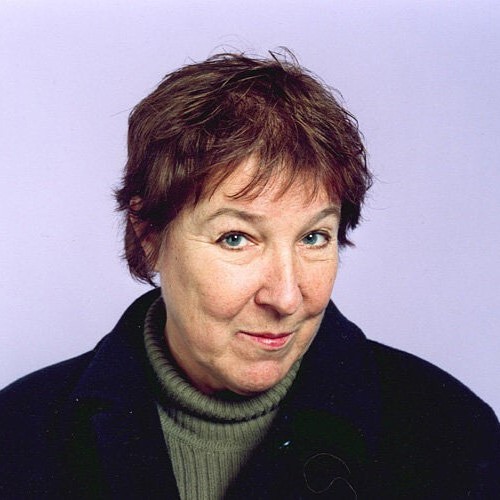
Born in Stockholm, Sweden, in 1945, Solveig Nordlund is a filmmaker of Swedish descent who became Portuguese through marriage to director Alberto Seixas Santos, and who has introduced new perspectives and viewpoints into the national film industry, attempting to, in her own words, bring her cinema closer to the public (a factor she considers different from working in Sweden, a country where spectators are valued, contrary to what seems to happen in Portugal). Her impact on contemporary Portuguese cinema is undeniable, spanning a wide range of areas. She was a founding member of Grupo Zero, according to Rodrigues (2015), a critical creative hub for Portuguese cinema (and for ‘political’ documentary or fiction films) in the years following the Carnation Revolution. She wrote and directed Dina and Django (1982), one of the most remarkable films of the post-April 25th era. In a country with a strong documentary tradition, where fiction from recent decades is typically categorized as either “auteur cinema” or “commercial cinema” (cf. Pereira, 2013, p. 464), leaving little room for the so-called “genre cinema”, Nordlund was one of the pioneers in directing a science fiction film in Portugal, Low-Flying Aircraft (2001). At the same time, she was the first director to adapt a work by António Lobo Antunes, The Death of Carlos Gardel (2011), for cinema. If, in the 1920s, a surge of foreign filmmakers (mostly French and one Italian) allowed for the development of what is known as genuinely Portuguese cinema (cf. Baptista, 2003; Costa, 1991; Nobre, 1960), Solveig Nordlund seems to embody the prototype of a female director who continues to uphold this tradition of outward-looking artistic exchange, akin to what foreign filmmakers brought to Portugal in the 1920s. Let us briefly recount her story as a Portuguese filmmaker from another country.
A graduate in Arts and Humanities from the University of Stockholm, Solveig Nordlund became acquainted with Portugal during the 1960s through her encounter with Alberto Seixas Santos, a Portuguese director. This was a pivotal moment in Nordlund's life. On the one hand, she married the Portuguese director and relocated to Lisbon, Portugal, in 1966. On the other hand, and probably due to her proximity to the local film industry, Nordlund’s interest in cinema intensifies. However, despite her desire to work in the film industry, Nordlund started by taking up various occupations, including that of a tourist guide and a textile factory employee in the South Bank region of Portugal (cf. Carvalho, 2009). Only in 1970, according to her resume, did Nordlund begin her career in cinema, working as an assistant director and editor for several prominent filmmakers such as Manoel de Oliveira, Fonseca e Costa, António Pedro Vasconcelos, Alberto Seixas Santos, João César Monteiro, Thomas Harlan, among others (cf. Nordlund, 2010a). In 1972, Nordlund was awarded a scholarship from the Calouste Gulbenkian Foundation and moved to Paris to study cinema at the Sorbonne under the supervision of the renowned director Jean Rouch. Her studies culminated in 1974, and she returned to Portugal after the 25th of April to begin her career as an editor, director, and producer at cooperatives such as Cinequipa, Cinequanon, and Grupo Zero, of which she was also a founder.
In 1978, she made her debut in fiction with the medium-length film Neither Bird Nor Fish. Nonetheless, it was not until 1982 that she wrote and directed her first fiction feature film, Dina and Django. After the premiere of this feature film, in the early 1980s, she got divorced and returned to Sweden, where she remained for twenty years. Despite being physically distant from Portugal, she continued to explore themes related to the country in her films. While in Sweden, she started to work for the Swedish Film Institute (SFI) and Sveriges Television (SVT), and she founded the Torromfilm production company, through which she produced and directed several films and television programs, including the short films Resant to Orion (1986) and Bergtagen (1994), a documentary series about writers for SVT (1987), the feature films See You Tomorrow, Mário (1993) and Nelio's Story (1997), among others.
According to the director's resume, between 1980 and 1999, she split her time between Portugal and Sweden. During this period, she worked as a film director and producer specializing in literary subjects and interviews with writers, including news reports and documentaries. In 1999, Nordlund returned to Portugal where, in addition to her work in cinema, she began a career as a theatre director (Nordlund, 2010a).
In 2001, Nordlund and Margarida Gil founded the production company Ambar Filmes, through which she produced and directed several films, including the feature film My Baby (2003), the short films Tomorrow (2004), The Kiss (2006), and The Slow Mirror (2009), and the short documentary In Transit: José Pedro Croft (2011), to name but a few.
She remained in Portugal until 2012, where she continued to write, direct, and produce films. In 2012 she returned to Sweden, to the High Coast, where she currently resides. Once again, despite relocating to Sweden, her work remained focused on Portugal and its culture. In 2013, she directs and produces the documentary Mannaminne about the Swedish artist Anders Äberg; in 2014, the artistic film/installation The View From My Window; in the same year, to commemorate the fortieth anniversary of the Portuguese revolution on April 25th, she made the film My Other Country, which gives us an autobiographical and personal depiction of the fifty years she lived in Portugal and followed its history and culture. In this work, she provides a personal portrayal of Portugal (a country she was not born in but adopted as her own), and its evolution from the revolution to the present day.
Nowadays, Solveig Nordlund shows no signs of slowing down. She continues to work for Swedish television and has several projects planned for the future, including a fictional feature film set in northern Sweden, where she lives, focusing on refugees, specifically young girls who are raised as boys until puberty. The film aims to shed light on a cultural practice known as basha posh (which literally translates to “dressed like a boy”). In countries such as Afghanistan, Iran, and Iraq, when a family has only daughters, one of them is registered, raised, and treated as a boy to protect their other sisters and help them attend school. An article in The Guardian even identifies these children as “a third gender, cut through ethnic groups and across geographical lines” (Nordberg, 2014). In such cases, the government finances sex change operations from female to male in some countries, while in others, women are expected to behave and dress like women and to marry upon reaching puberty.
Solveig Nordlund aims to draw on the cultural heritage of refugees to uncover the experiences of girls raised as boys. Her project seeks to tell the story of one of these girls who appears to be a man in every way except one, physically, and understand what happens next to this girl who is neither a woman nor a man (Nordlund, 2018). This is a new feature film project that Solveig Nordlund wants to develop, a story that addresses gender issues and subversion, what is feminine and what is masculine. Yet, Nordlund claims she has never felt discriminated against as a woman in cinema, except once, due to money. There was a time when it was brought into question whether she, as a woman and as a foreigner, should be entitled to the same amount of money as the other members of the Portuguese Film Centre. After the matter was put to a vote, Nordlund rightfully obtained the same share of funding as her colleagues, which she found natural and justified because, when it came to men, there were some who also had little experience, as she did, so she was the same as the others. Furthermore, Nordlund believes that, if there is a willingness to work, there is a way, and everything will work out (cf. Nordlund, 2018).
Solveig Nordlund is the paradigm of a woman filmmaker who has proven she is capable of doing anything. As a foreigner, she was given more leeway and opportunities in Portugal, a fact she acknowledges. Regardless, it is her versatility and ease in working with various genres, genders, and gender biases, both on and off-screen, as well as her ability to create freely while remaining attentive to her audience, that captivates us and leaves us eagerly anticipating what else might she have to show us in the future.
[1] Text adapted from an excerpt from the doctoral thesis Mulheres Guionistas: Uma Definição Dinâmica da Linguagem no Feminino no Cinema Português [Women Screenwriters: A Dynamic Definition of Language in the Feminine in Portuguese Cinema] (Pereira, 2020).
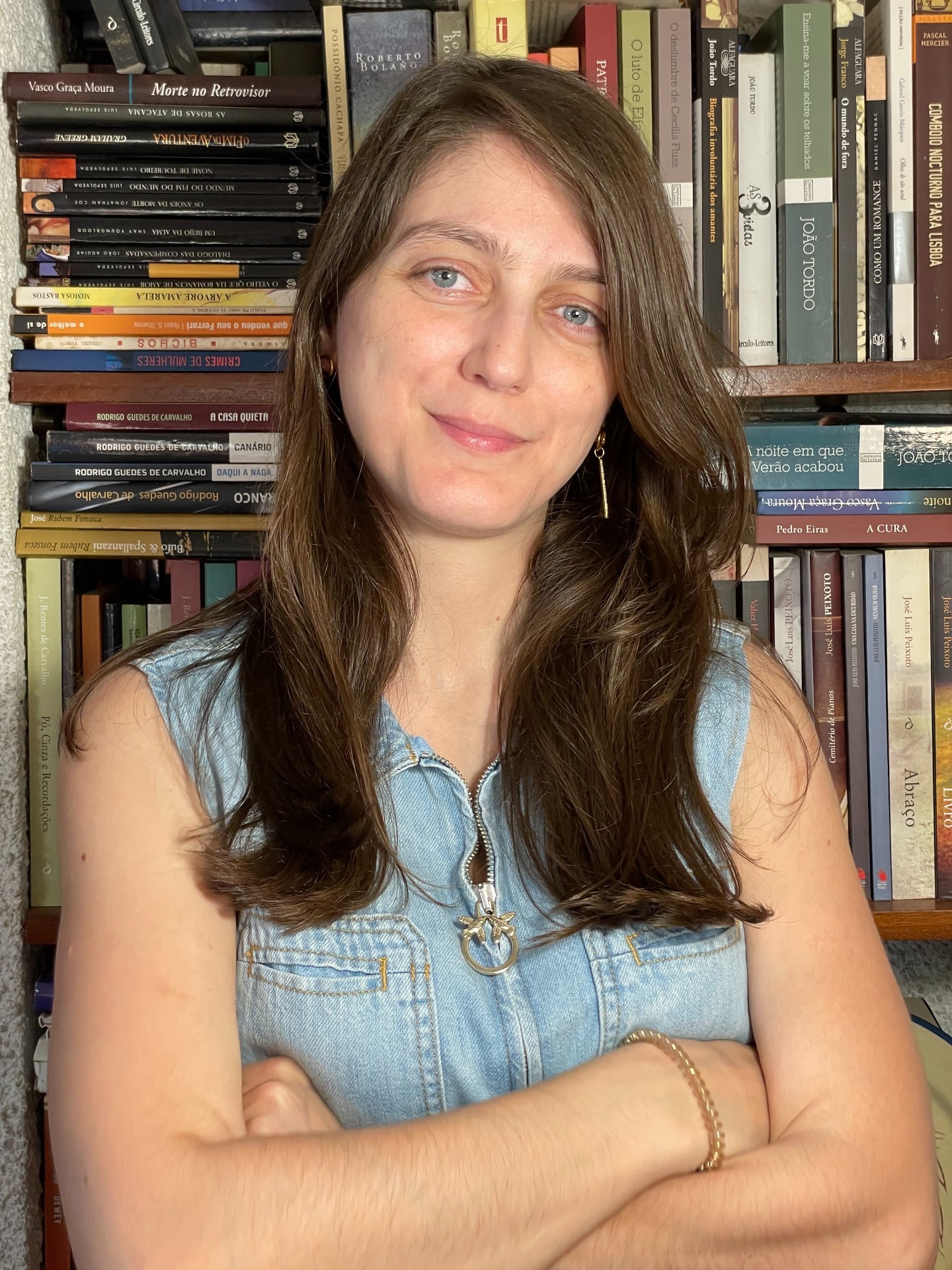
Ana Sofia Pereira
Ana Sofia Pereira is a post-doctoral fellow in the project "FEMglocal - Glocal feminist movements: interactions and contradictions'' (PTDC/COM-CSS/4049/2021). In 2020 she completed a European PhD in Communication Sciences (specialization in Cinema, Screenwriting) at Universidade Nova de Lisboa, with a stay at the University of Reading, about the lack of women scriptwriters and directors in Portugal. In the same year, she was one of the winners of the Program to Support the Writing and Development of Audiovisual and Multimedia Works promoted by the ICA with the documentary miniseries "Virgínia", based on one of the case studies of her doctoral thesis. In 2022 she was again one of the winners of the same ICA support, this time with a fictional series about migration and the genetics of return. She is a higher education professor, researcher, scriptwriter and script-doctor.

